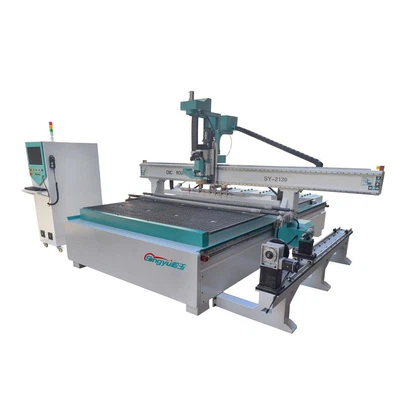
Detailed Explanation Of The Stone Machine Inspection Process
Leave a message
As the core equipment in the stone processing industry, the performance and safety of stone machinery directly affect production efficiency and product quality. In order to ensure that the stone machine meets industry standards and meets customer needs, a rigorous inspection process is essential. This article will introduce the inspection process of the stone machine in detail to help foreign trade customers better understand the product quality assurance system.
The inspection of stone machines is usually divided into three main stages: pre-production inspection, in-production inspection, and pre-delivery inspection.
Pre-production inspection is mainly aimed at the quality control of raw materials and parts. The key components of the stone machine, such as motors, transmission systems, cutting tools, etc., must be strictly screened and tested. For example, the power and stability of the motor must meet the design requirements, and the accuracy of the transmission system must be measured by professional instruments to ensure smooth operation without deviation. The inspection at this stage is aimed at eliminating potential problems from the source and laying the foundation for subsequent production.
In-production inspection runs through the assembly process, focusing on the assembly accuracy and operating status of the equipment. Technicians will use tools such as laser calibrators and vibration analyzers to monitor the key parts of the stone machine in real time. For example, parameters such as the horizontality of the cutting platform and the verticality of the cutter head need to be precisely adjusted to ensure processing accuracy. At the same time, indicators such as the operating noise and temperature of the equipment will also be recorded to determine whether there are any abnormalities.
Pre-delivery inspection is the last checkpoint of stone machine quality control. The equipment needs to undergo comprehensive performance tests, including no-load operation, load test and durability test. No-load operation mainly checks the start, stop and operating stability of the equipment; the load test simulates the actual processing environment to verify the performance of the stone machine under high-intensity work; the durability test evaluates the reliability and life of the equipment through long-term operation. In addition, safety protection devices, such as emergency shutdown systems, protective covers, etc., also need to be tested one by one to ensure compliance with international safety standards.
Through the above strict testing process, the stone machine has reached the best state before delivery to customers. This not only guarantees the performance and safety of the equipment, but also provides foreign trade customers with a reliable product quality assurance.